Project Sandbox | Bricks
Project Sandbox is the working title for an interactive AR/mobile experience with a simple goal: to translate LEGO building into virtual space in an intuitive and unique way, utilising AR and fully digital spaces. Through UE5, players will be able to experience LEGO in the year 1979, with a timeless yet historically accurate palette of bricks, minifigures, and colors, and the liberty to build and play with whatever their hearts desire.
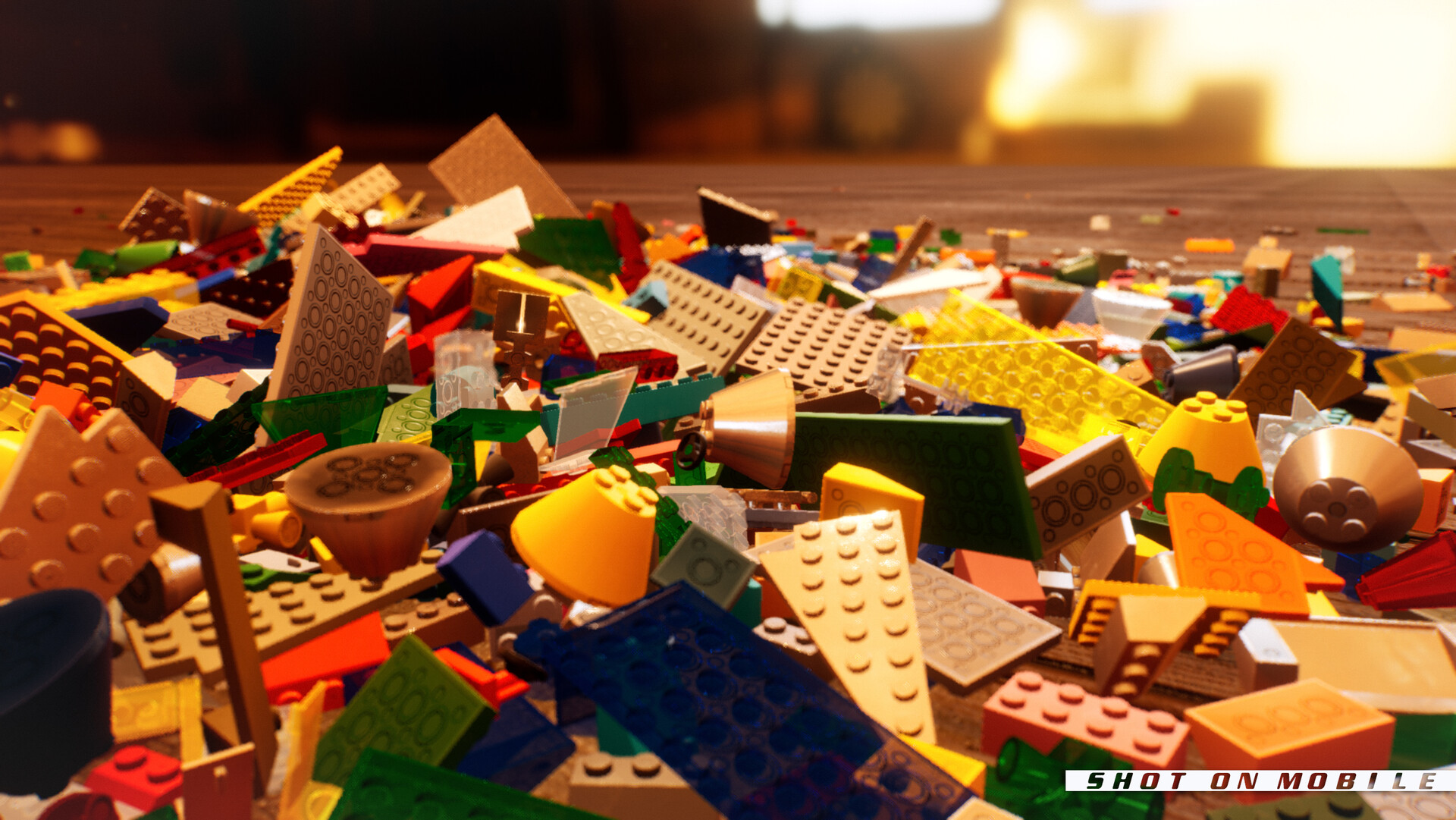
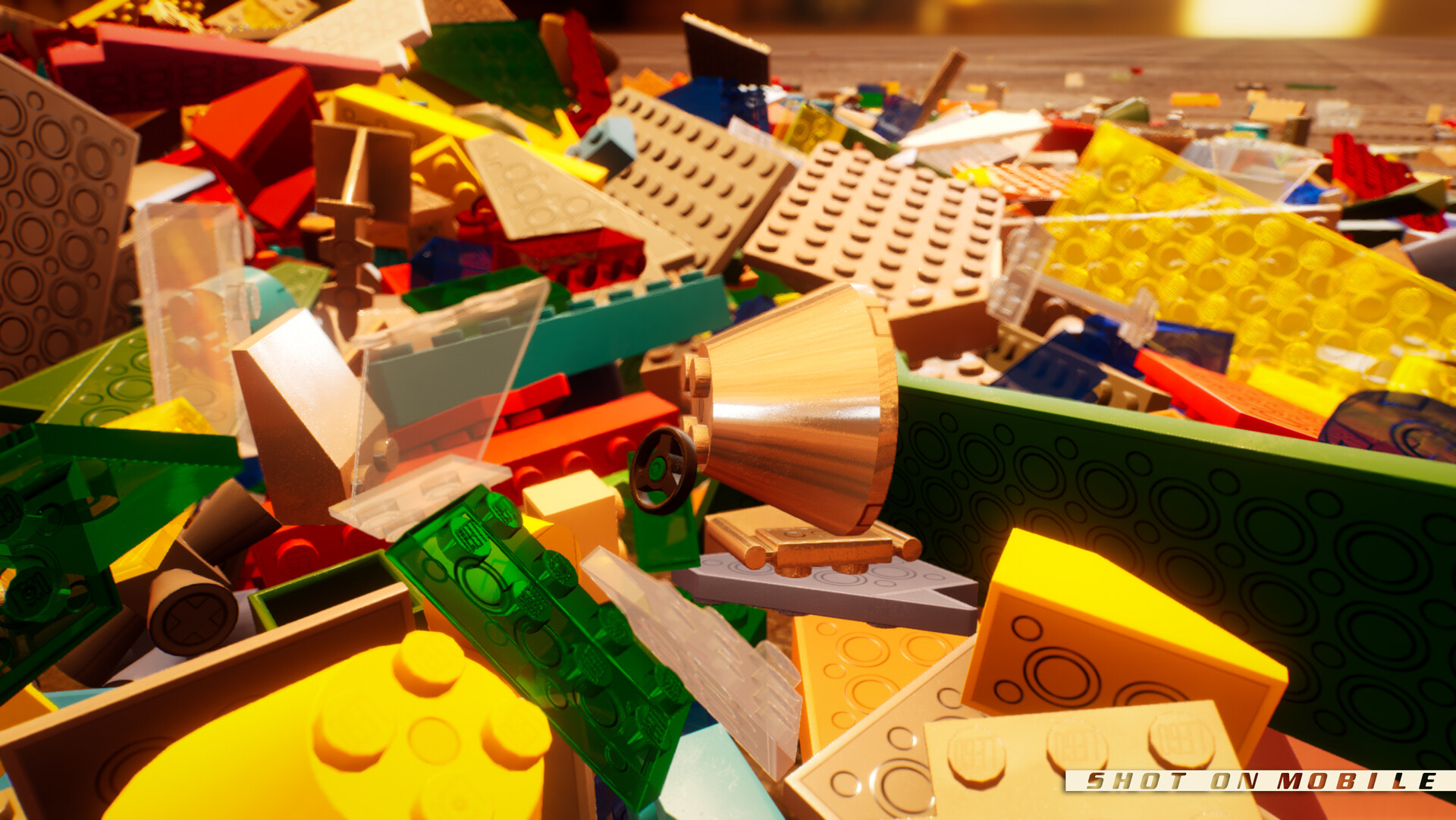
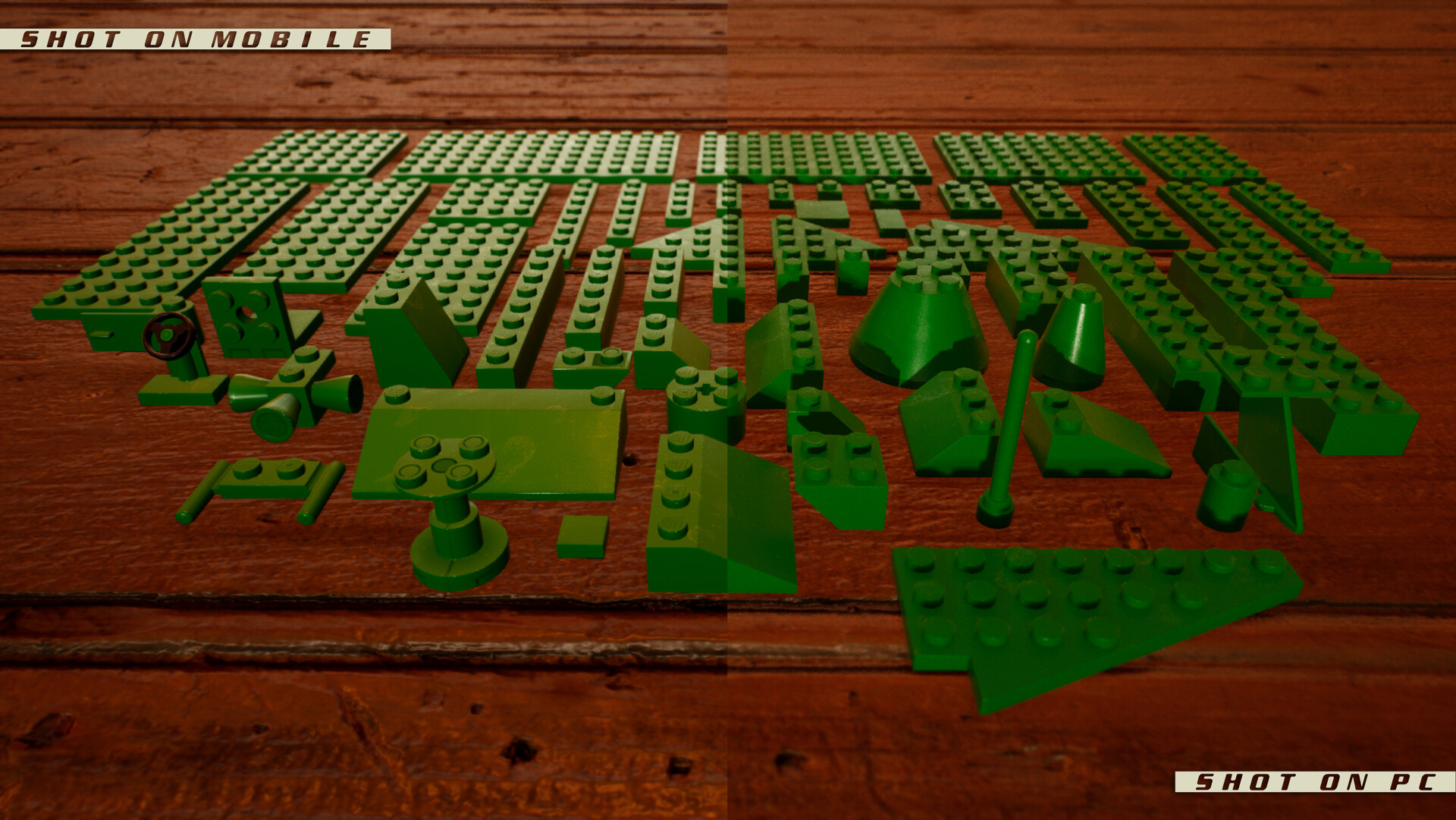
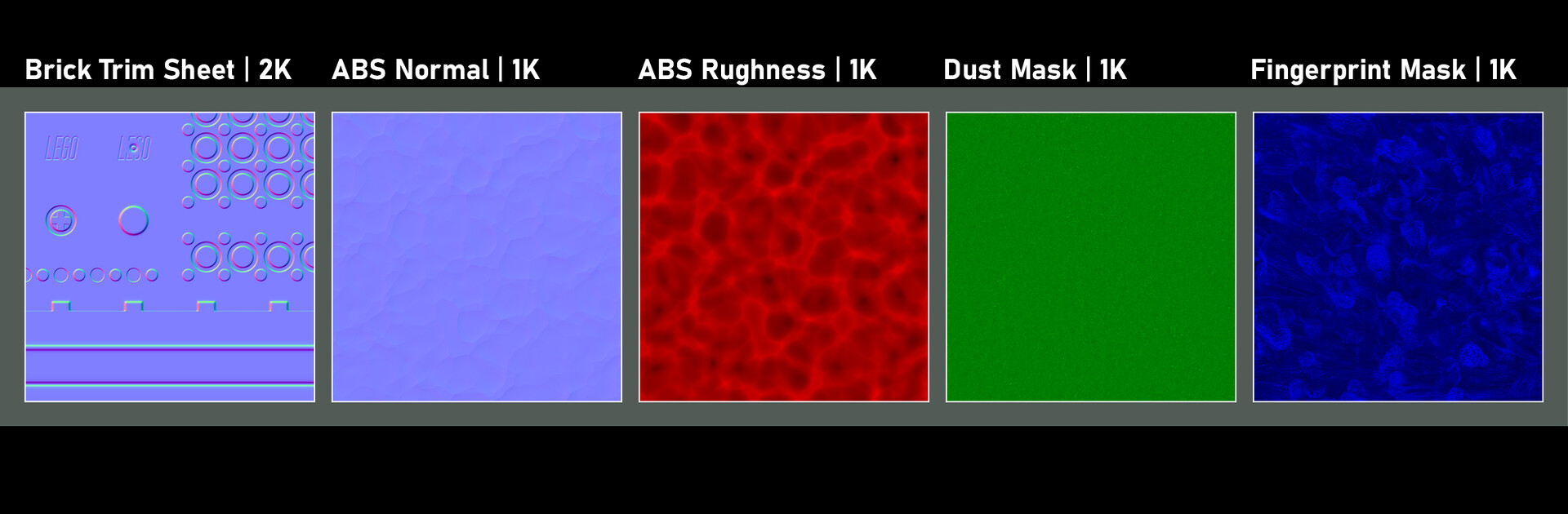
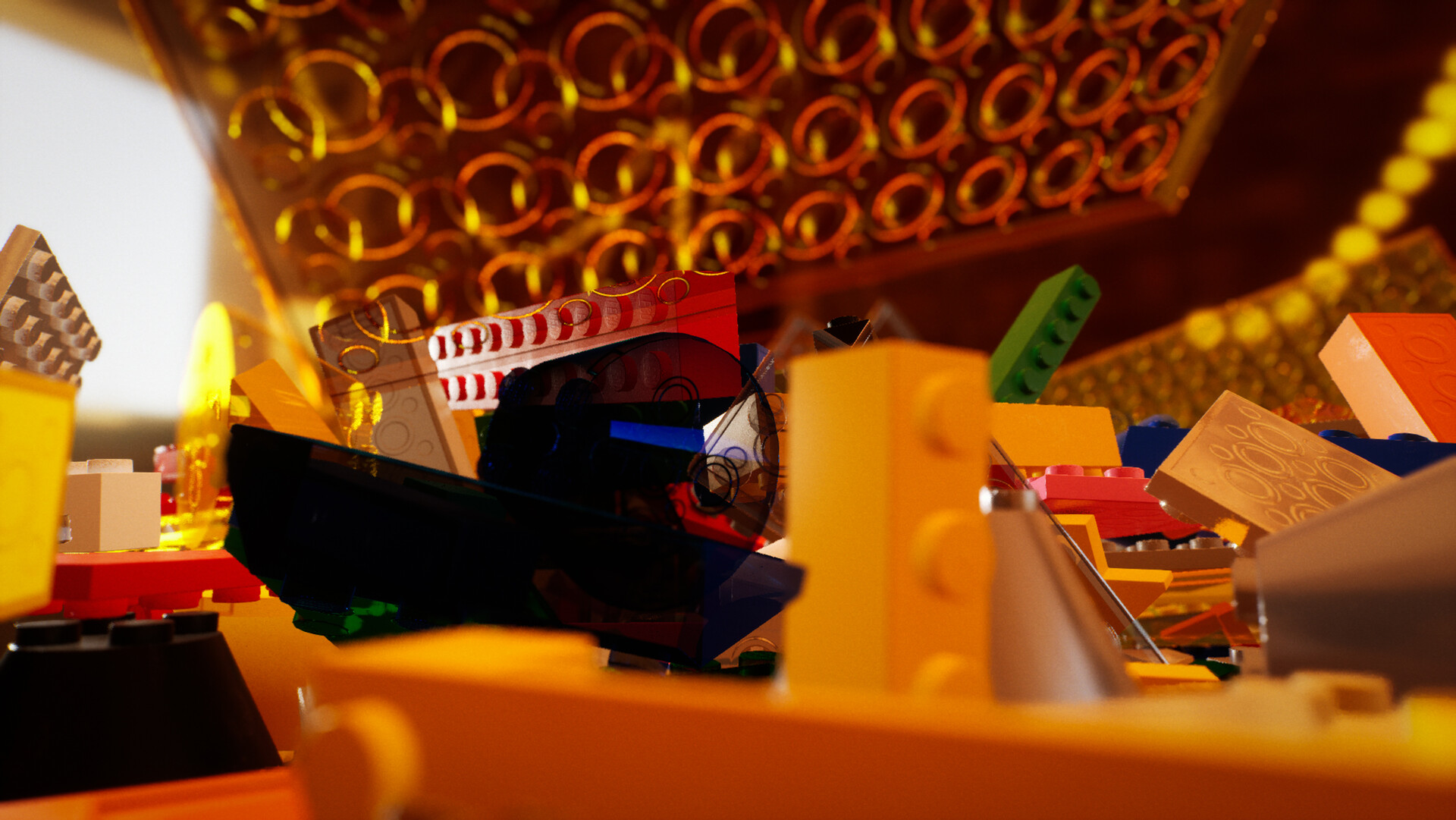
This Showcase focuses on the brick models I created for the project, as well as their unique material pipeline. To ensure an adequate level of visual fidelity in augmented reality, I used a mid-poly workflow on the bricks, enabling me to reduce their shared texture cost to one trim sheet normal and a set of wear textures used across the entire project. As opposed to the Minifigure I modeled, which uses bespoke AO, roughness, and opacity (SSS) textures, these bricks fall back on vertex paint, through which I optimized my workflow.
On the code side, bricks can be spawned dynamically with any plastic material LEGO had created until 1979.
All in all, I am very pleased with the results, both in the desktop version and on mobile.
Stefan Müller's (https://stefanmuller.artstation.com/) blog posts on LEGO materials (https://stefanmuller.com/exploring-lego-material-part-2/) has been invaluable in translating the toys into AR. As always, some corners had to be cut when working in real time, and on mobile.
Similarly, Rebrickable's LEGO color databank was a great ressource in determining which colors LEGO had produced up to 1979, especially regarding their lesser known systems like Modulex (https://rebrickable.com/colors/). The same can be said about Christoph Bartneck's precise measurements of the LEGO brick (https://www.bartneck.de/2019/04/21/lego-brick-dimensions-and-measurements/), which empowered the modelling process substantially. Lastly, Stud.io's large catalog of 3D models served as a great point of reference during the creation of my game-ready, modular bricks (https://www.bricklink.com/v3/studio/download.page).
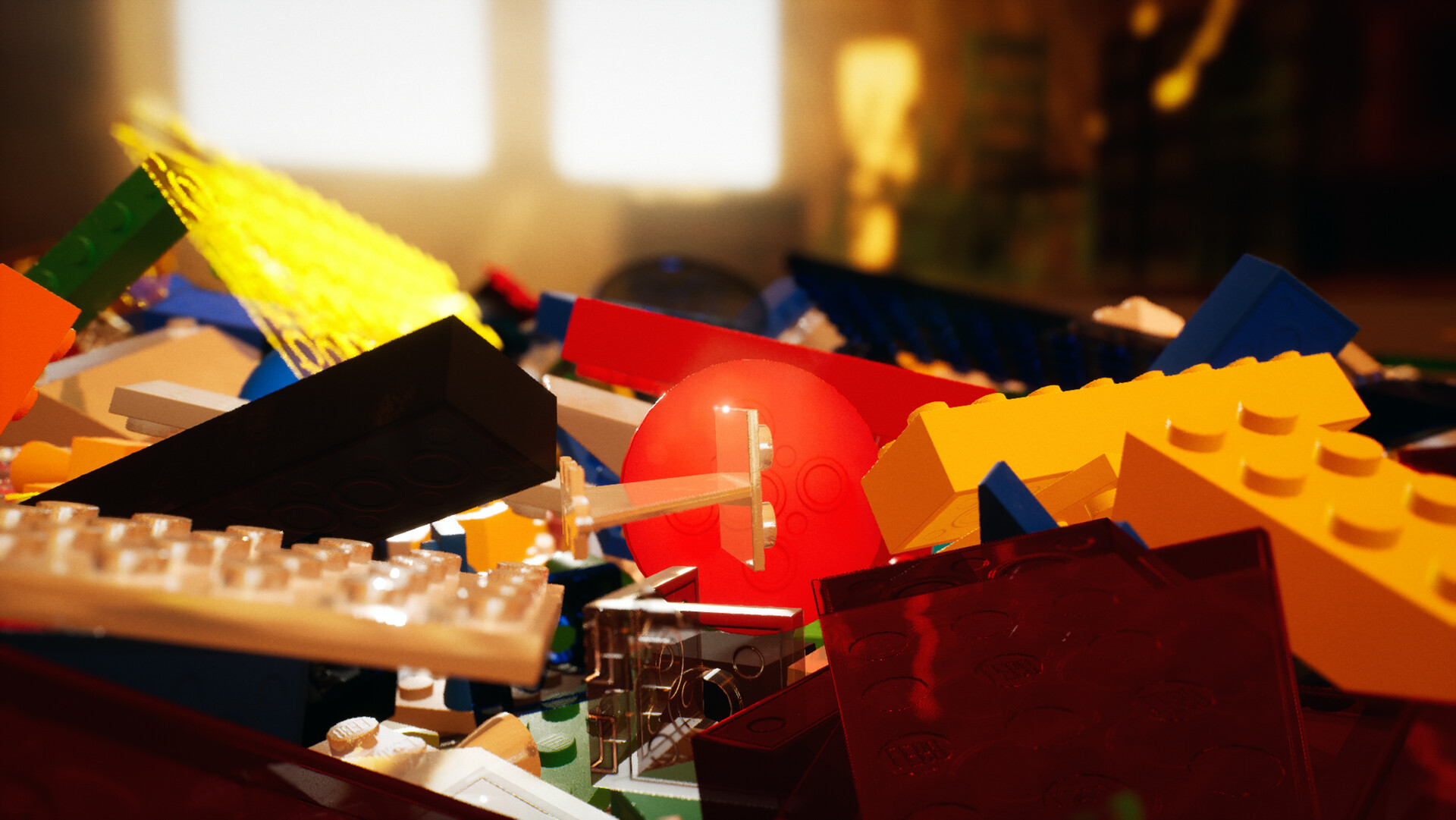
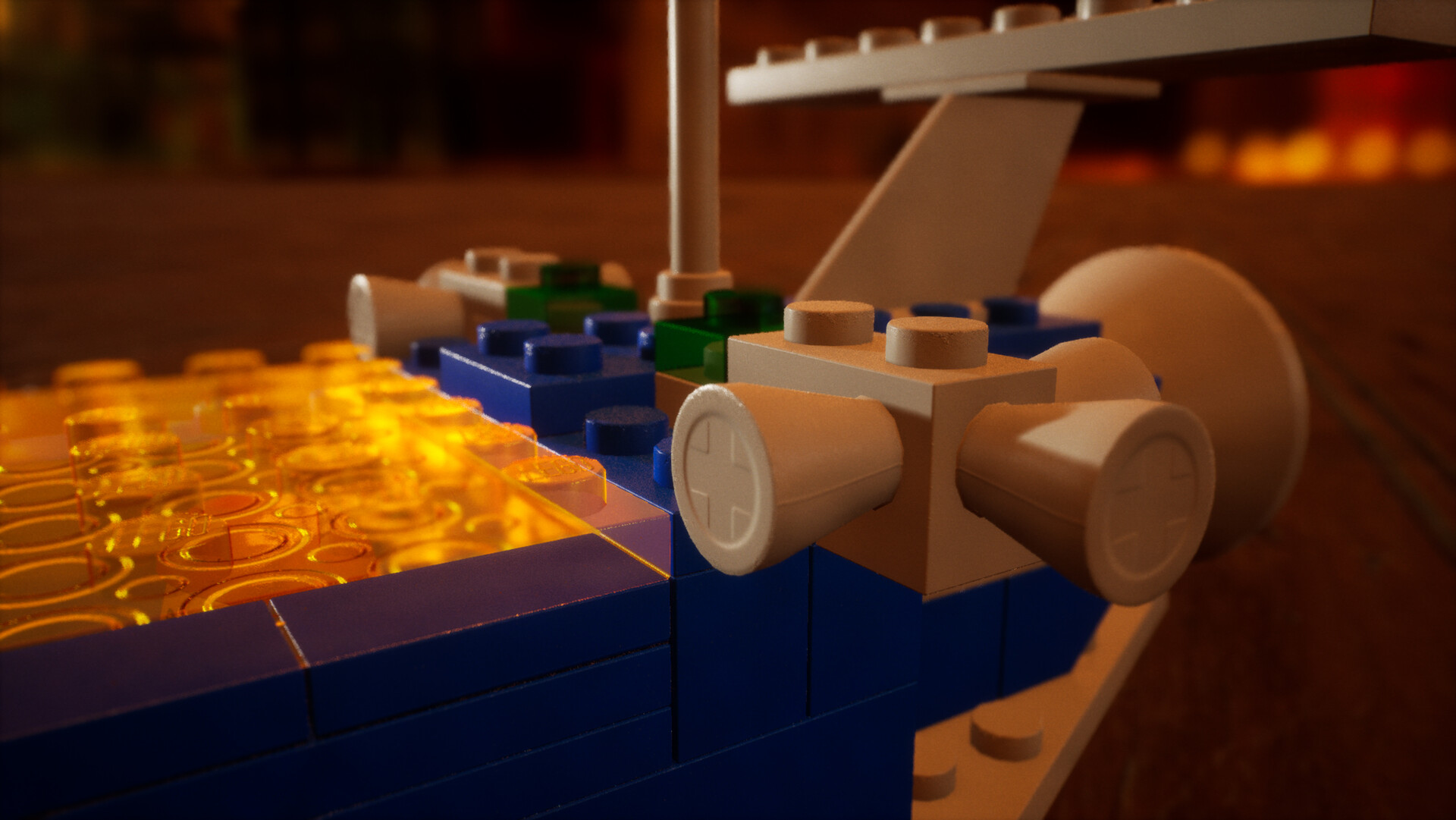
For translucent plastic, I decided to read an HDRI directly in the material shader instead of calculating expensive real time light and reflections. Thus, the bricks can still look stunning on mobile.
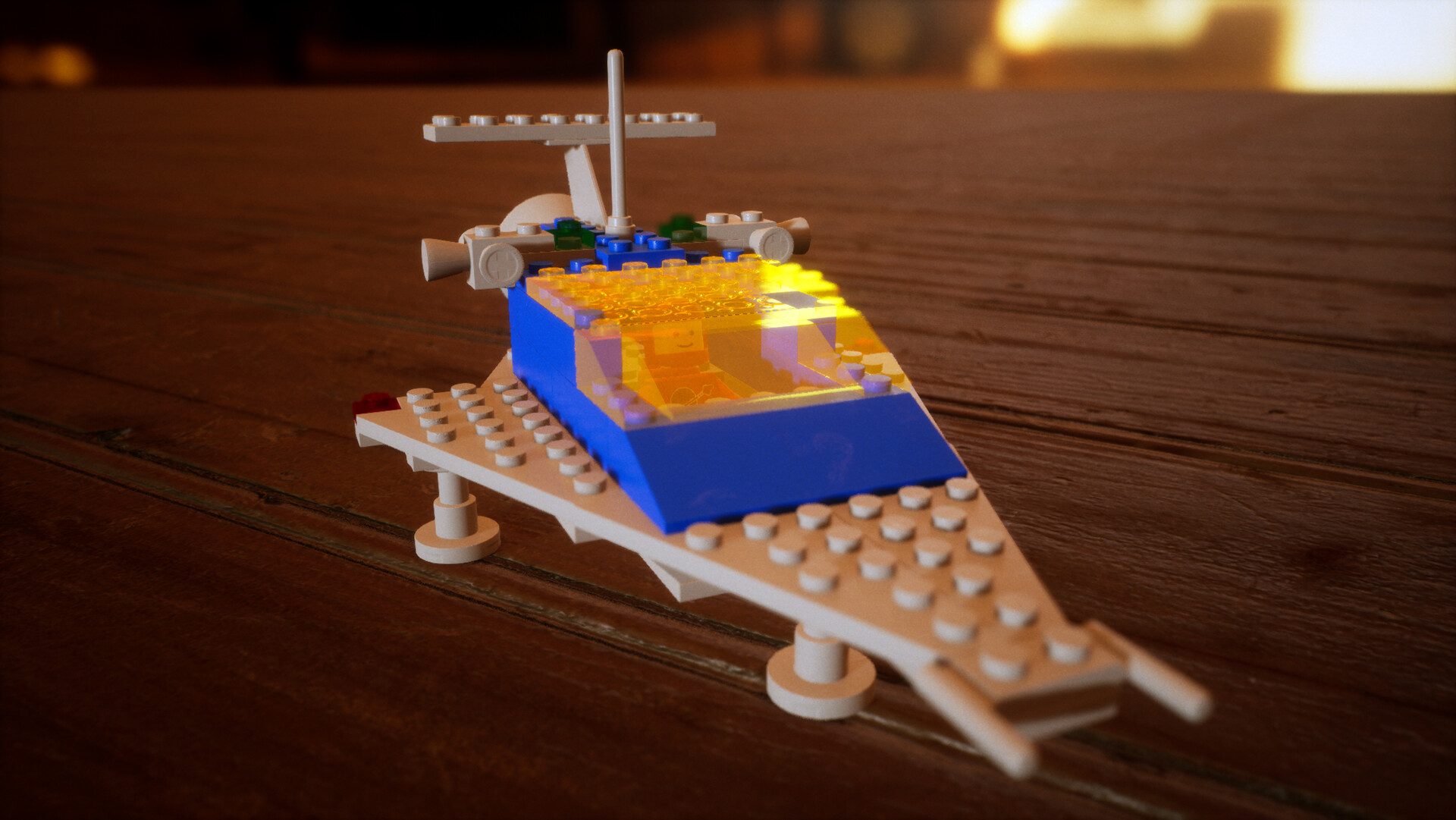
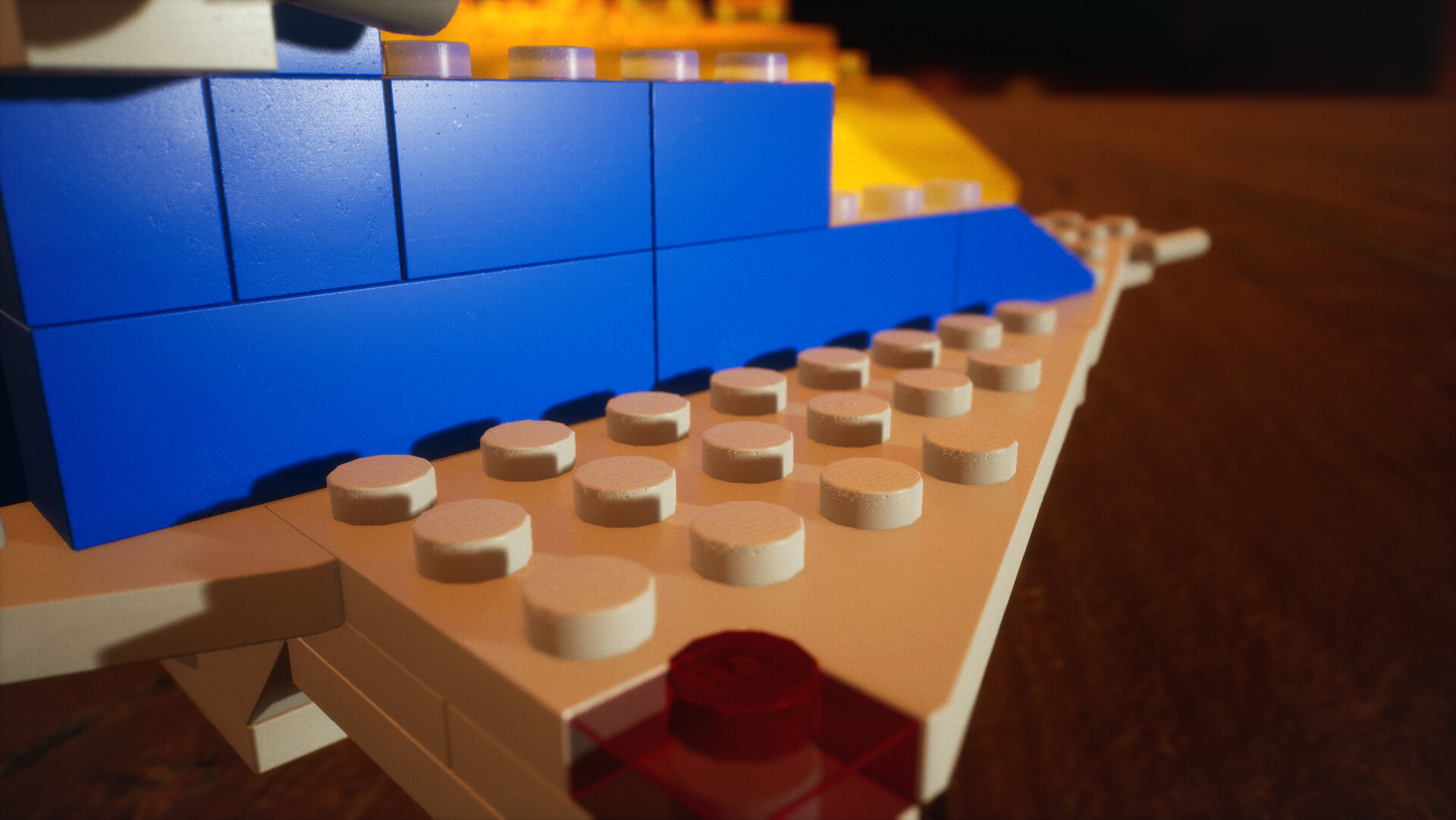

SSS at its finest, to fully convey the physical qualities of LEGO bricks.
The brick spawner in action, showcasing a solid collision and culling solution to enable fluid brick interactions, even on mobile.

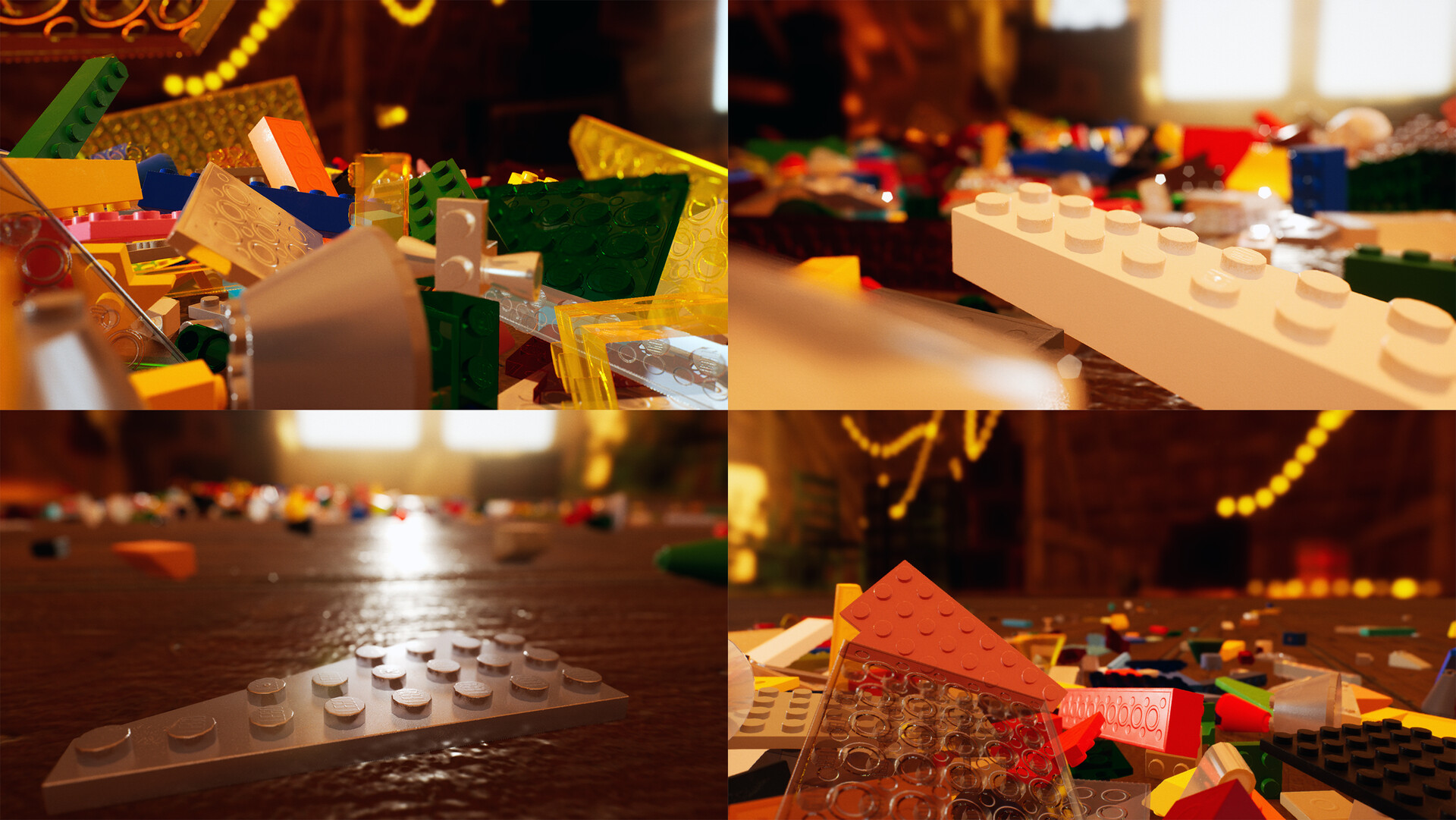

I wrote a quick custom post-process shader to emulate the desktop version's scene depth and film grain.